
How to Use Essential Oils Effectively?
 Victoria Plekenpoloylwithvictoria.comMay 21, 2026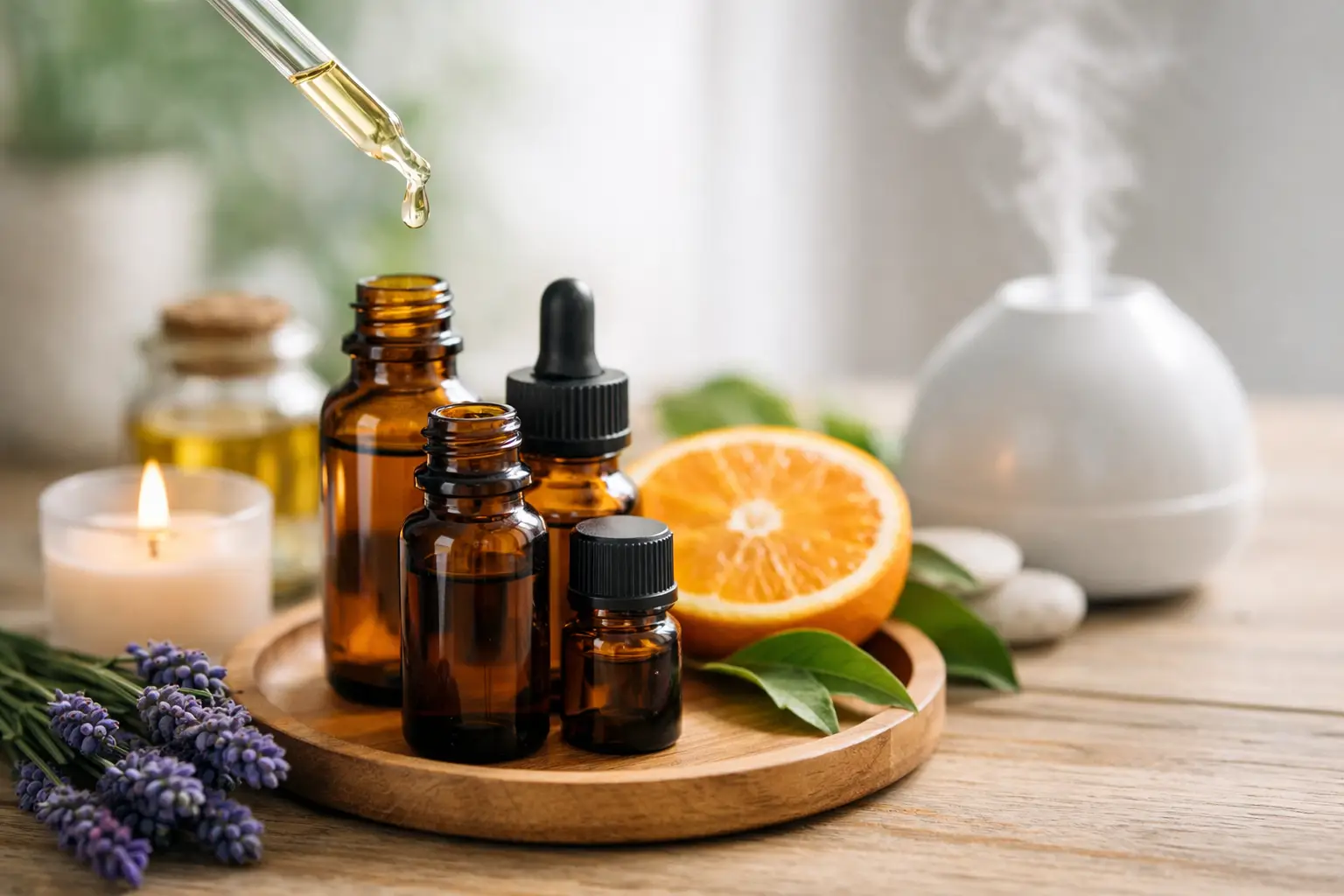
Most mistakes with essential oils aren't about choosing the wrong scent. Instead, they happen when someone uses too much, applies them incorrectly, or expects more from them than they can truly deliver.
Most mistakes with essential oils aren't about choosing the wrong scent. Instead, they happen when someone uses too much, applies them incorrectly, or expects more from them than they can truly deliver. Yet, if we use them well, aromatherapy can quickly become one of the most pleasant and beneficial parts of a daily wellness routine.

I find that the question isn't simply how to use essential oils, but also when, how much, and for what purpose. What works for winding down in the evening isn't the same as for a refreshing morning start or a home spa atmosphere. Achieving good results doesn't require a complicated set of rules, but rather a few solid foundations.
How to Use Essential Oils in Everyday Life?
The most obvious method is diffusion. For this, just a few drops of essential oil in a diffuser or aroma lamp are enough, and the atmosphere of the space will immediately change. Citrus oils generally have a more invigorating character, while lavender, woody, or balsamic notes are more suited for evening relaxation.
Here, however, moderation truly matters. In a smaller room, 3-5 drops may be enough, while a larger living room might require a bit more. An overly intense scent isn't more pleasant; it just makes the air heavier and can cause headaches for those who are more sensitive.
Another common use is topical application to the skin. This requires more attention, as essential oils are concentrated substances. Only a small amount of oil should be applied directly to the skin, and in many cases, it's advisable to use them diluted with a carrier oil. An example of this could be a neutral vegetable oil, which makes the application gentler and safer.
Many people also like to incorporate them into massages, baths, or their own wellness rituals. This works, but here too, the rule is that less is often more. A well-chosen scent subtly supports the mood. Ten different aromas at once are more likely to be distracting.
Which Application Method is Good for What?
Diffusion is a good choice if you want to change the atmosphere of a room. It's ideal for relaxing at home, evening reading, unwinding, or even a more focused start to work in the morning. The advantage of using a diffuser is that it doesn't come into direct contact with the skin, making it a comfortable entry point for beginners.
Using them on the skin can provide a more targeted experience, but individual sensitivity needs more attention. If someone has sensitive skin or uses active ingredients in their routine, such as acids or retinol, then it's particularly important to approach this with caution. Essential oil alone is not a skincare miracle, and it does not replace a well-structured facial care routine.
This is why it's important to separate aromatherapy from facial skincare. For body care, wellness, or relaxation purposes, they can be incorporated much more easily, whereas on the face, there's much more uncertainty. If someone is consciously building a skincare routine with, for example, hydrating, soothing, or anti-aging products, then essential oil should rather be a supplementary atmospheric element, not a primary active ingredient.
How to Use Essential Oils Safely?
This is the part that shouldn't be taken lightly. Just because an essential oil is natural doesn't automatically mean it's gentle in all situations. Its concentration is high, so gradual use is the best strategy.
As a first step, it's always worth checking the manufacturer's recommendations. Not all oils can be applied in the same way. There are fresher, easier-to-use types, and there are those that are stronger, more intense, or require increased caution. Quality also matters. With premium essential oils, the composition is generally more reliable, the scent profile is cleaner, and the user experience is more predictable.
Before applying to the skin, it's practical to perform a patch test. If any irritation occurs, it's not advisable to continue using that oil on that area. It's not suitable for the eye area, mucous membranes, or broken skin, and caution is particularly important for children, during pregnancy, or in sensitive health conditions.
Many also make mistakes when adding drops to bathwater. Essential oil does not simply dissolve in water, so pouring it in by itself can lead to concentrated contact with the skin. In such cases, it's better to use it mixed with a suitable carrier substance, making the experience gentler.
Which Essential Oil Should You Choose According to Your Goal?
If you want a fresher, more energetic mood in the morning, a citrus character is generally a good choice. Orange, lemon, or grapefruit-like scents feel cleaner and lighter, and many people prefer them for work or household tasks for this very reason.
In the evening, a softer, more soothing range works well. Lavender, woody, warmer-toned oils can help your evening routine truly become a winding-down experience. In such cases, a diffuser, soft lighting, and a consciously built body care routine together offer much more than any of them individually.
If a home wellness experience is your goal, it's worth aligning the scent with your beauty routine. A fresh, clean aroma can work well after a morning shower, while a deeper, softer scent is more suited for an evening body lotion, face mask, or relaxing bath. This makes the entire routine cohesive and memorable.
It's also perfectly fine to switch according to the season. In summer, many prefer lighter, citrusy notes, while in winter, warmer, spicier or earthy notes are favoured. There isn't a single right scenario for essential oil use – personal comfort matters a great deal.
Common Mistakes to Avoid
One of the most typical mistakes is wanting a stronger scent, and therefore using more and more drops. This isn't more effective; it's just more wasteful and often more unpleasant. Essential oils provide a premium experience precisely because they are intense even in small quantities.
Another mistake is when someone uses the same oil for everything. You might have a favourite scent, but that doesn't mean it will be ideal for morning, evening relaxation, bathing, and skin application. A conscious choice here yields much better results.
It's also common to confuse essential oils with perfume or classic air fresheners. The experience might be similarly pleasant, but the function isn't the same. Using essential oils is more about ritual, mood creation, and wellness support, not simple fragrancing.
How to Incorporate Essential Oils into Your Routine
The best method is not to try and reorganise your entire home lifestyle around them all at once. Start with a single, well-functioning situation. For example, diffusing in the evening while you complete your skincare routine. If that works, then you can move on to a weekend bath or a relaxing body care habit.
I suggest you always start with your goal. Do you want to refresh, relax, create a more homely atmosphere, or bring a little 'me-time' into your day? If you know this, it's much easier to choose the right scent and application method.
Conscious shopping pays off here too. In a reliable webshop, it's easier to navigate between categories, compare scent profiles, and choose premium solutions that truly fit your daily routine. If you'd like to browse aromatherapy and beauty products in one place, our selection could be a good starting point.
Essential oils truly work well when we don't over-mystify them, but rather use them wisely. A well-chosen scent, an appropriate amount, and a routine that suits you are often enough to make your home calmer, your day more organised, and your 'me-time' truly more qualitative.